

The phrase “bad boy” can mean confidence, independence, a rebellious style or behaviour that actually causes harm. Those are very different things. Attraction may give you a reason to get to know someone; it does not tell you whether the relationship will meet your needs.
Focus on the person’s actions and your own choices. You can enjoy confidence, adventure and sexual chemistry while expecting honesty, consent and respect.

Name what draws you in
Ask yourself what you enjoy: humour, directness, creativity, a sense of adventure or the feeling of being noticed. Naming the quality can help you look for it in people who also treat you well.
Confidence can include admitting uncertainty, listening and accepting a no. It does not require being emotionally unavailable or acting as though other people’s needs are beneath consideration.
You do not have to criticise yourself for feeling attracted to someone. Feelings are information about your experience, and you can decide how much weight to give them when choosing what happens next.
Separate style from treatment
A person’s clothes, music, tattoos or hobbies do not establish how they will behave in a relationship. Getting to know them means noticing how they treat you and others, including when they are disappointed.
Enjoying an adventurous sport does not establish that someone will cheat or ignore agreements. Ask whether the choices you share are ones you both freely want, and whether either person can decline without pressure.
Someone may prefer to keep parts of their past private. That is different from misleading you about present commitments or information that affects your choice to date them. Ask about what matters now without demanding access to every personal detail.
There is no required version of masculinity that makes a person a good partner. Emotional openness, gentleness and the ability to apologise can sit alongside independence or a strong personality.
Ask what you both want
Discuss whether you want occasional dates, exclusivity or a committed partnership. Someone who honestly wants a casual arrangement is giving you information you can use, even if you want something different.
You might say, “I like spending time with you, and I am looking for a relationship with regular contact and exclusivity. What are you looking for?” Listen to the answer rather than treating uncertainty or a refusal as a challenge to win.
Sexual chemistry does not establish commitment or compatibility. Talk about consent and expectations, keep room for either person to change their mind and avoid using sex as a test of whether someone will stay.
Recognise care without accepting control
Care leaves room for your judgment. Jealousy does not entitle a partner to monitor your whereabouts, control your clothes or decide whom you can see. You remain a person with choices throughout a relationship.
Charm and warmth can be enjoyable. Notice whether respect continues when you disagree, need space or say something the other person does not want to hear. A convincing explanation does not erase a repeated pattern of harm.
A gift, a romantic gesture or help with a problem does not create a debt of sex, access or forgiveness. You can appreciate kindness and still keep a boundary.
Love is respect’s guide to boundaries includes privacy and physical limits. Discussing those needs is part of getting to know someone, and respecting them does not depend on agreeing with every preference.
Keep responsibility for change with the person choosing it
You can encourage someone, but lasting change depends on their choices and actions. Consider the relationship that is available now rather than organising your life around the partner you hope they will become.
If you find yourself repeatedly explaining, covering up or taking responsibility for their behaviour, our guide to care and over-responsibility offers questions about making room for your own needs.
Friends or family may raise concerns. Ask what specific behaviour they have noticed, consider their perspective and make your own decision. You do not have to stay to prove independence or leave simply to satisfy someone else.
Choose a relationship you can stand behind
Look for a combination you actually want: attraction, compatible expectations and treatment you can describe as respectful. Excitement does not require having to guess whether your limits will matter tomorrow.
Choose one question to ask or one pattern to consider. If you are repeatedly hurt, Why Love Can Hurt can help you separate feelings, assumptions and unmet needs.
If saying no brings threats, fear or retaliation, prioritise confidential support and your safety rather than trying to prove that the relationship can work. A difficult history or an appealing side does not make someone else’s harmful choices your responsibility.
Read the infographic in text
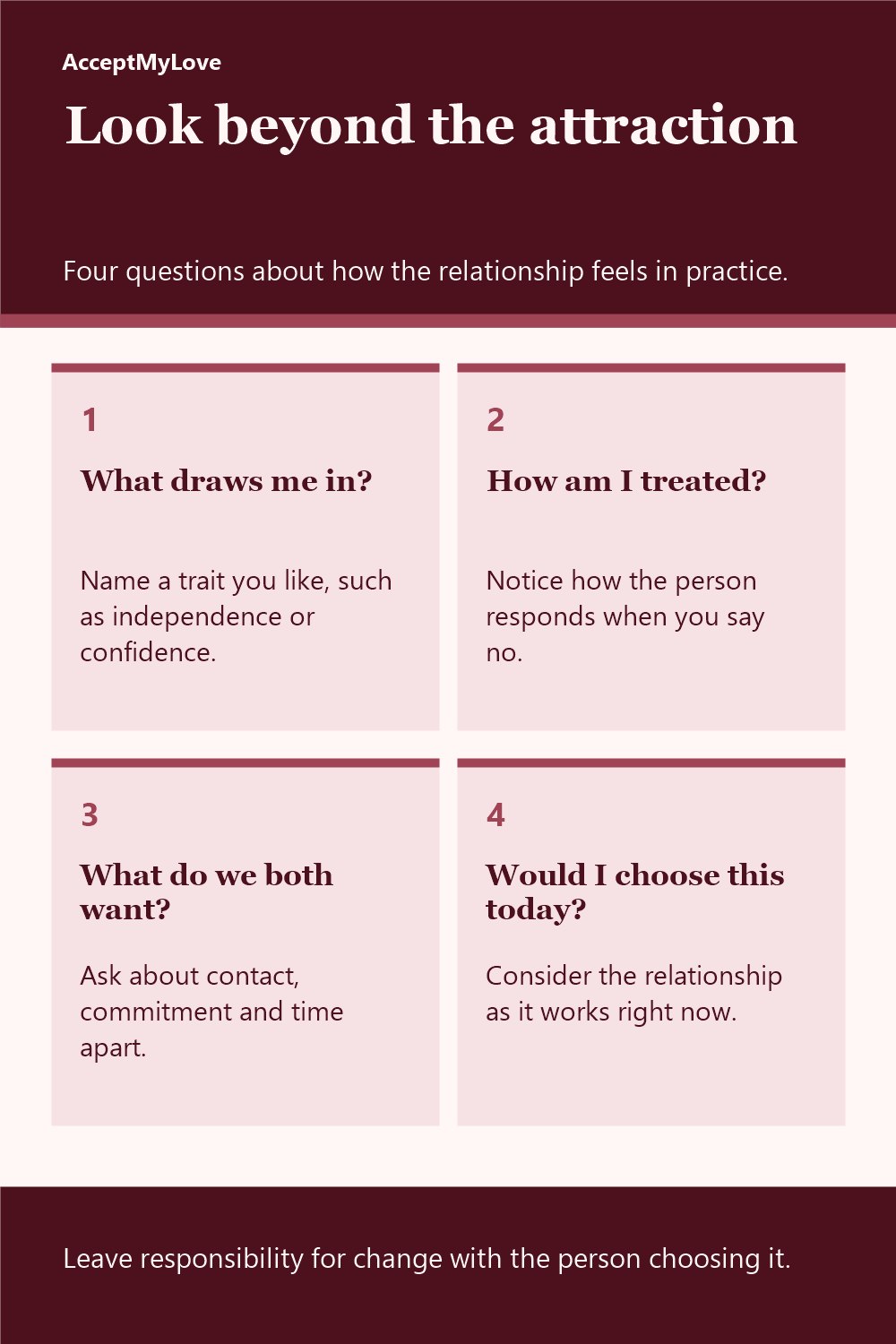
Look beyond the attraction Four questions about how the relationship feels in practice.
- What draws me in? Name a trait you like, such as independence or confidence.
- How am I treated? Notice how the person responds when you say no.
- What do we both want? Ask about contact, commitment and time apart.
- Would I choose this today? Consider the relationship as it works right now.
Leave responsibility for change with the person choosing it.