

Casual dating means spending time with someone without necessarily working toward a long-term partnership. It can include romance or physical intimacy, but neither is automatic. The arrangement works only when both people understand what they are agreeing to and can choose it freely.
Casual does not mean careless. You still need honesty, consent and consideration for the other person’s time and feelings.
Define what casual means to each of you
One person may mean occasional dates with no exclusivity. Another may want regular companionship while keeping future plans open. If you use the same label for different expectations, disappointment can build even when neither person intended to mislead the other.
Try asking: “What are you looking for right now?” and “Are there any expectations about exclusivity, contact or spending time together that we should discuss?” You do not need a perfect answer, but you do need enough clarity to make your own decision.
Check whether the arrangement suits you
Ask yourself how you feel about the relationship as it is, rather than how you hope it might change. Would you still choose it if the other person did not want a committed partnership later?
- Notice whether you feel comfortable expressing a preference or saying no.
- Consider how much contact and emotional availability you want.
- Be honest if you are agreeing mainly because you fear losing the person.
- Leave room for your other relationships, interests and responsibilities.
You do not have to prove that casual dating is a good or bad idea in general. It may simply be a good or bad fit for you at this point in your life.

Talk about practical boundaries
Discuss plans, communication, privacy and how either of you can end the arrangement. Before physical intimacy, talk openly about consent, comfort and the sexual-health precautions you both want. No previous date or agreement obliges either person to continue.
A simple check-in can prevent a lot of guessing: “I’m enjoying seeing you. Is this still feeling right for you, and has anything changed?”
Make room for changing feelings
Feelings can deepen, fade or become more complicated. If you want a different relationship, say so rather than hoping extra attention or jealousy will persuade the other person.
They may not want the same change. You can respect their answer and still decide that continuing would hurt you. Stepping away can be a reasonable choice even when neither person has done anything wrong.
End it with clarity when it no longer fits
Where it is safe to communicate, be direct and kind: “I’ve realised I’m looking for a different kind of relationship, so I’m going to stop dating.” Avoid leaving an opening that you do not mean to offer.
Casual dating is one possible relationship choice. The useful measure is whether it feels honest, mutual and compatible with what you need.
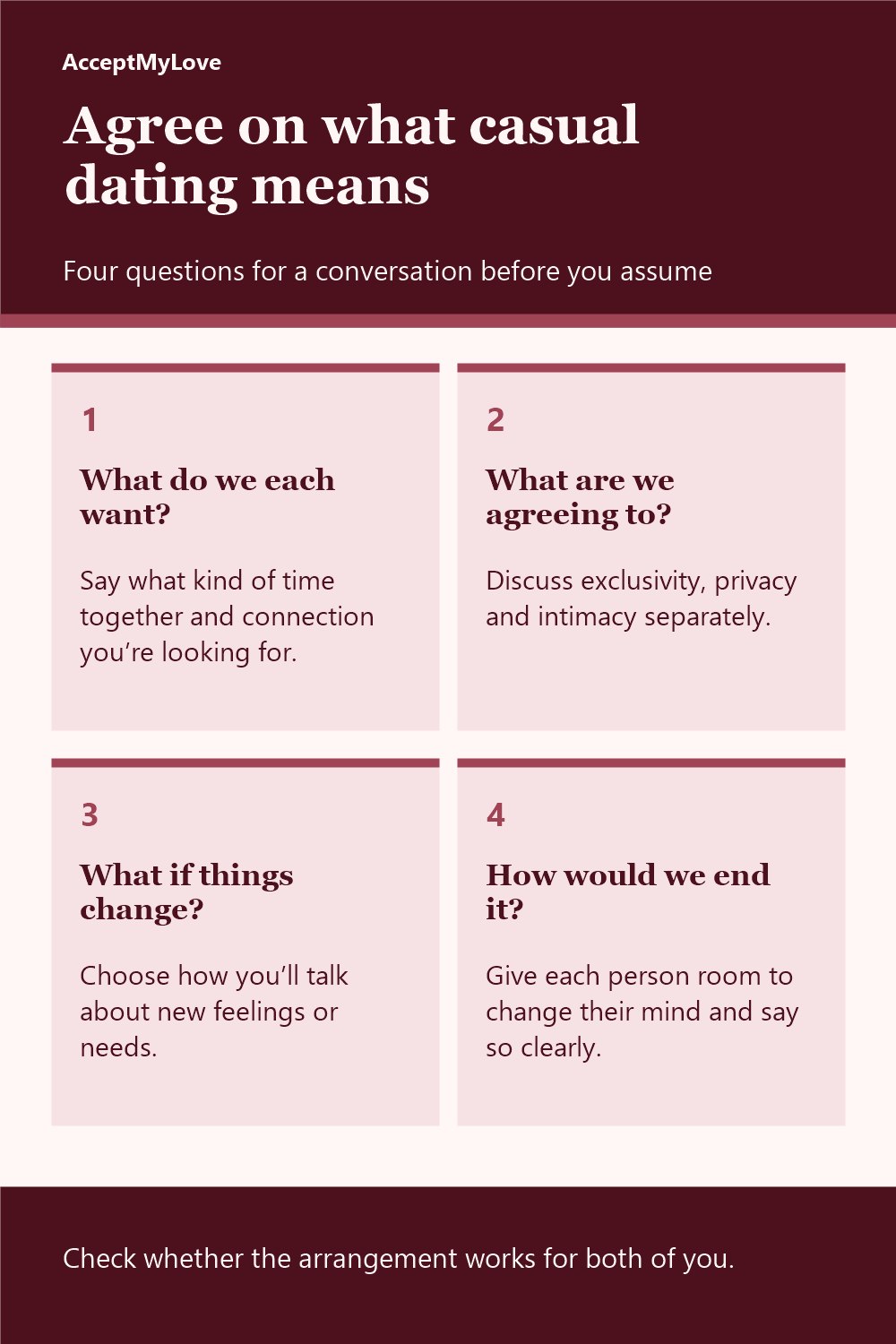
Read the infographic in text
Agree on what casual dating means
- What do we each want? Say what kind of time together and connection you’re looking for.
- What are we agreeing to? Discuss exclusivity, privacy and intimacy separately.
- What if things change? Choose how you’ll talk about new feelings or needs.
- How would we end it? Give each person room to change their mind and say so clearly.
Check whether the arrangement works for both of you.