

Sometimes you first notice a health concern as a feeling that something is different. You may call that intuition, body awareness or simply knowing your usual patterns. Use it as a reason to describe what has changed and seek appropriate care.
You do not have to work out the cause before asking for help. Clear observations, a short note and questions for a qualified clinician can make the next conversation easier to follow.
Describe what you notice
Separate the observation from the interpretation. “My heart has been racing while I’m resting” is an observation. “This must be anxiety” or “This must be a spiritual message” is an explanation that has not yet been established.
Write down when the change began, how often it happens, how long it lasts and what you were doing at the time. Mention what seems to make it better or worse, without assuming that a pattern proves a cause.
If something is new, keeps returning or concerns you, ask a healthcare professional what to do next. Intuition, a reading or an online search cannot establish a diagnosis or which treatment is right for you.
Know when a symptom needs urgent attention
Heart palpitations are one example where the next step depends on what is happening. If you currently have palpitations that do not go away, or palpitations with chest pain, shortness of breath, feeling faint or fainting, use your local emergency medical service. Do not drive yourself for emergency care.
If those symptoms have stopped, seek urgent medical advice rather than waiting for a routine appointment. The NHS guide to heart palpitations explains its urgent-care advice and when recurring episodes should be assessed. Use the emergency and urgent-care services available where you live.
Do not delay urgent help while waiting for a reading, an interpretation or reassurance from an article.

Prepare a short note for your appointment
When there is no immediate emergency, a few written details can help you explain your concern. Bring the information you have rather than waiting until you can produce a perfect account.
- What changed: describe the symptom or concern in your own words.
- When and how often: note the start, duration and pattern you have noticed.
- What you take: list medicines, supplements, vitamins and any recent changes; include allergies you know about.
- What matters most: choose the questions or worries you particularly want to discuss.
MedlinePlus’s guidance on talking with your doctor includes ways to prepare, describe symptoms and keep track of your care information.
Ask questions until the plan is clear
If an explanation does not make sense to you, say so. You might ask:
- What do you think may be happening, and what is still uncertain?
- What is the next step, and why are you recommending it?
- How and when will I receive any test results?
- What changes should prompt me to seek help sooner?
- When should we follow up, and whom should I contact with questions?
Ask for an explanation in different words or written instructions if that would help. The NIH guide to making the most of an appointment encourages people to raise concerns, including subjects that may feel sensitive or embarrassing.
Keep personal meaning alongside practical care
Reflection, prayer or a spiritual practice may help you feel supported. If those practices matter to you, you can discuss them with your care team. They do not need to become a test of whether you are positive enough or spiritually aware enough to get well.
There is no need to blame yourself for missing a sign. The useful next step is to respond to what you are noticing now, get help when needed and make sure you understand the care plan.
If someone close to you offers an explanation or recommendation, you can appreciate their concern while asking your clinician how it relates to your situation. Support from a friend or partner does not replace an assessment.
Make the follow-up workable
If you want support, ask whether a trusted person can accompany you or help take notes. If you need an interpreter or another communication adjustment, contact the service ahead of the appointment to discuss what is available.
Afterwards, keep your notes, instructions and result information somewhere you can find them. If you remain unsure about the plan, ask the care team how to clarify it rather than guessing what an instruction meant.
A health change can affect ordinary routines and relationships as well as the appointment itself. Consider which practical tasks you could share with someone you trust while you follow the care plan. You do not have to manage every part of the day alone.
Read the infographic in text
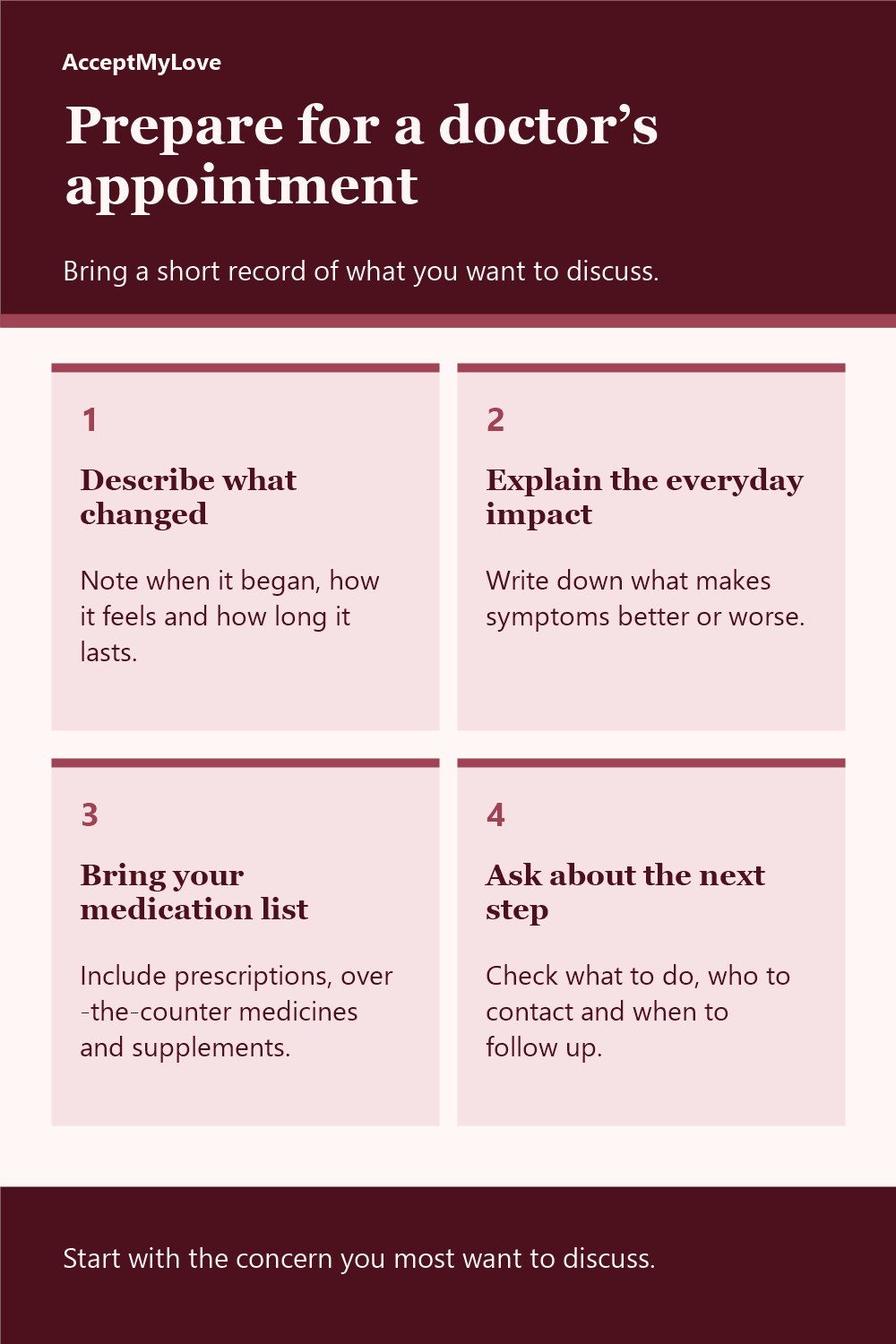
Prepare for a doctor’s appointment Bring a short record of what you want to discuss.
- Describe what changed Note when it began, how it feels and how long it lasts.
- Explain the everyday impact Write down what makes symptoms better or worse.
- Bring your medication list Include prescriptions, over-the-counter medicines and supplements.
- Ask about the next step Check what to do, who to contact and when to follow up.
Start with the concern you most want to discuss.