

After someone dies, you may want to feel close to them, say something left unsaid or explore a spiritual belief that matters to you. A mediumship reading is one choice some people consider. You are equally free to wait, change your mind or decide it is not for you.
No practitioner can promise contact with a particular person, a specific message or an end to grief. Before booking, focus on what is being offered, the full cost and whether you feel able to ask questions and say no.
Know what you are booking
Ask about the format and length of the appointment, whether the price is fixed or charged by time, and what happens if you stop early. Check any cancellation, recording or follow-up terms before paying.
Useful questions include: “What does the quoted price cover?” “Can I decline extra services?” “Will I receive a recording, and who can access it?” A clear answer gives you something concrete to consider. You do not need to book while you are still unsure.
Set an amount you can comfortably choose to spend and a time limit you want to keep. A longer or more expensive session does not establish that a message is genuine or that the experience will give you what you hope for.
Stay open without forcing a fit
Mediumship is approached through spiritual beliefs, and people understand a reading in different ways. An interpretation may feel meaningful to you without proving where it came from.
You can listen thoughtfully and still say, “That doesn’t mean anything to me,” or “I don’t recognise that name.” There is no need to supply a connection simply to keep the session moving or make the practitioner feel successful.
For more context, this guide to what a medium cannot promise explores expectations and limits. Keep your own understanding separate from pressure to accept a claim.

Ask questions and set boundaries
Before the session begins, ask how questions will be handled. You may prefer to listen first and talk afterwards, or you may want to clarify something as it arises. An agreed format should still leave you free to pause or end the appointment.
You can decline a topic, keep personal details private or say, “I don’t want to discuss that.” You do not owe access to private accounts, intimate photographs or other people’s information.
If you would like to take notes or make a recording, ask permission first. Notice whether you feel respected when you express a preference. Being spiritual or open-minded does not require accepting instructions that make you uncomfortable.
If the reading disappoints you
A session may not bring the reassurance or information you hoped for. That is not proof that you lacked faith, were insufficiently positive or prevented a loved one from communicating.
You do not need to purchase another session to put an unsatisfying experience right. Take time before deciding whether any follow-up has value for you, and refer to the terms you were given if you want to raise a concern.
Pressure to pay escalating fees to remove a curse, guarantee a result or avoid a threatened consequence is a reason to stop and seek an independent perspective. The U.S. Postal Inspection Service’s psychic-scam guidance describes warning signs involving promises, hidden costs and repeated demands for money.
Give yourself time afterwards
Before interpreting every coincidence or making a major decision, give yourself room to reflect. You might note what was actually said, what you personally took from it and what remains uncertain.
Ask yourself: Did I feel heard? Could I disagree? Was the cost clear? Did I feel pushed towards another purchase or decision? These questions concern the experience you had; they do not require you to settle every spiritual question.
You can keep a meaningful reflection without reorganising your life around a prediction. A song, dream or memory can matter to you without becoming an instruction you must follow.
Make room for other kinds of support
There is no required timetable or spiritual task you must complete after a loss. Talking with someone you trust, writing privately about what you wish you could say or keeping a familiar remembrance can be options alongside, or instead of, a reading.
If grief is making everyday life difficult, consider support from a healthcare professional, counsellor or bereavement service. The NHS guide to grief after bereavement or loss describes different experiences of grief and ways to seek help.
You can respect your beliefs while choosing support that helps you manage the day in front of you.
Read the infographic in text
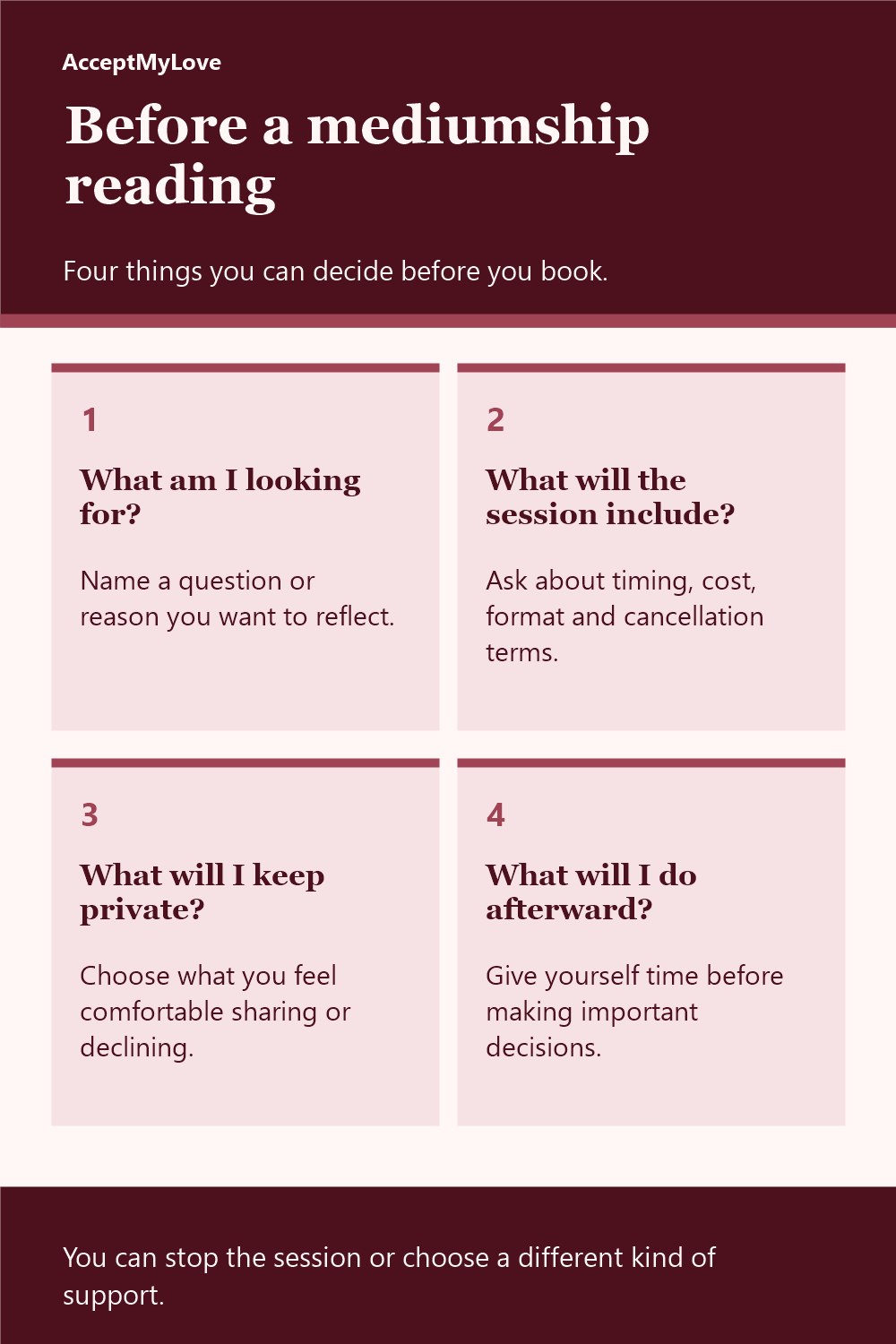
Before a mediumship reading Four things you can decide before you book.
- What am I looking for? Name a question or reason you want to reflect.
- What will the session include? Ask about timing, cost, format and cancellation terms.
- What will I keep private? Choose what you feel comfortable sharing or declining.
- What will I do afterward? Give yourself time before making important decisions.
You can stop the session or choose a different kind of support.