

A meeting can feel extraordinary: the timing, a familiar feeling or an unexpected reunion may lead you to think you were meant to be together. You may understand that through faith, destiny or the importance the connection has in your life.
You can value that meaning while still finding out what the relationship is like for both people. A feeling of destiny does not make decisions on anyone’s behalf or establish a shared future.

Ask what “meant to be” means to you
For one person, the phrase may express gratitude for meeting a partner. For another, it may describe a spiritual belief about how their lives connect. Someone else may use it simply because they feel unusually comfortable with you.
If you are dating, ask rather than assuming the phrase means the same thing to both of you. “When you say we were meant to meet, what does that mean for the relationship you want?” can open a conversation without requiring matching beliefs.
You can also keep an interpretation personal. Writing about what the meeting has brought to your life may help you name its importance without making claims about what the other person must feel.
Find out what you both want
Talk about the relationship you want now: whether you are dating, whether you want exclusivity and how much time and commitment you can offer. A meaningful connection can still bring together people with different wishes.
An invitation or a conversation gives the other person room to answer. Dreams, coincidences or a powerful sense of familiarity cannot substitute for that answer. If someone declines contact or a relationship, respect what they have said.
When both people want to continue, discuss practical choices such as where you live, caring responsibilities and plans that could affect your time together. Agreement matters even when the relationship feels special.
Pay attention to ordinary days
Notice whether you can speak honestly, keep interests outside the relationship and ask for help or space. Consider how you both respond to a disagreement, a changed plan or an ordinary disappointment.
Try describing an example rather than relying on a label: “We rearranged our plans when work changed,” or “I said I needed an evening alone, and that was respected.” Those details tell you something about daily life together.
The NHS relationships guide includes listening, boundaries and maintaining your own interests. Think about which of those helps you feel that the relationship has room for you as a whole person.
Keep room for change and uncertainty
You do not have to settle every question about the future to enjoy a relationship. You can make a limited decision, such as planning another date or discussing a concern, and learn from what happens.
People’s circumstances and preferences can change. Revisit agreements rather than treating a promise made early on as permission to ignore a current need or a withdrawn yes.
A reunion with an ex can feel significant, but it is still worth asking what has changed since the relationship ended. Look for concrete choices and follow-through rather than assuming that returning proves the earlier difficulties are resolved.
Allow a meaningful relationship to have an ending
If a relationship ends, you may feel that you have lost both a person and a story about how your life would unfold. It is understandable to need time with that loss. You do not have to decide immediately what the relationship means in hindsight.
Meaning does not require renewed access to someone who has asked for distance. If contact continues for shared responsibilities, keep the arrangements clear and separate practical communication from attempts to restart romance.
Remaining single after a breakup does not establish that you missed your only chance at love. Your life can include friendship, care and purpose while you are still unsure whether you want to date again.
You can also decide to leave a relationship that feels deeply significant. If you are weighing that choice, questions about staying or leaving may help you consider your needs and circumstances.
Choose one action in the present
Choose something you can actually do: ask how the other person sees the relationship, plan time together, keep an appointment for yourself or speak with someone you trust about a concern.
If you enjoy thinking about soulmates, our guide to meaning and mutual choice explores how to keep that hope alongside the information available to you.
You do not have to prove or disprove destiny to notice whether a relationship respects you. Let your beliefs inform the meaning you give your experience while leaving room for both people’s decisions.
What a changed plan can tell you about a strong connection
Suppose you believe meeting the person was meant to happen and feel close after two long conversations. Then one of you needs to change a weekend plan. Notice how the change is discussed. Does each person still have room for rest, work or family responsibilities?
You can value the sense of connection and also ask what you each want to make time for next month. Treat the belief and the everyday conversation as two ways of reflecting on the relationship.
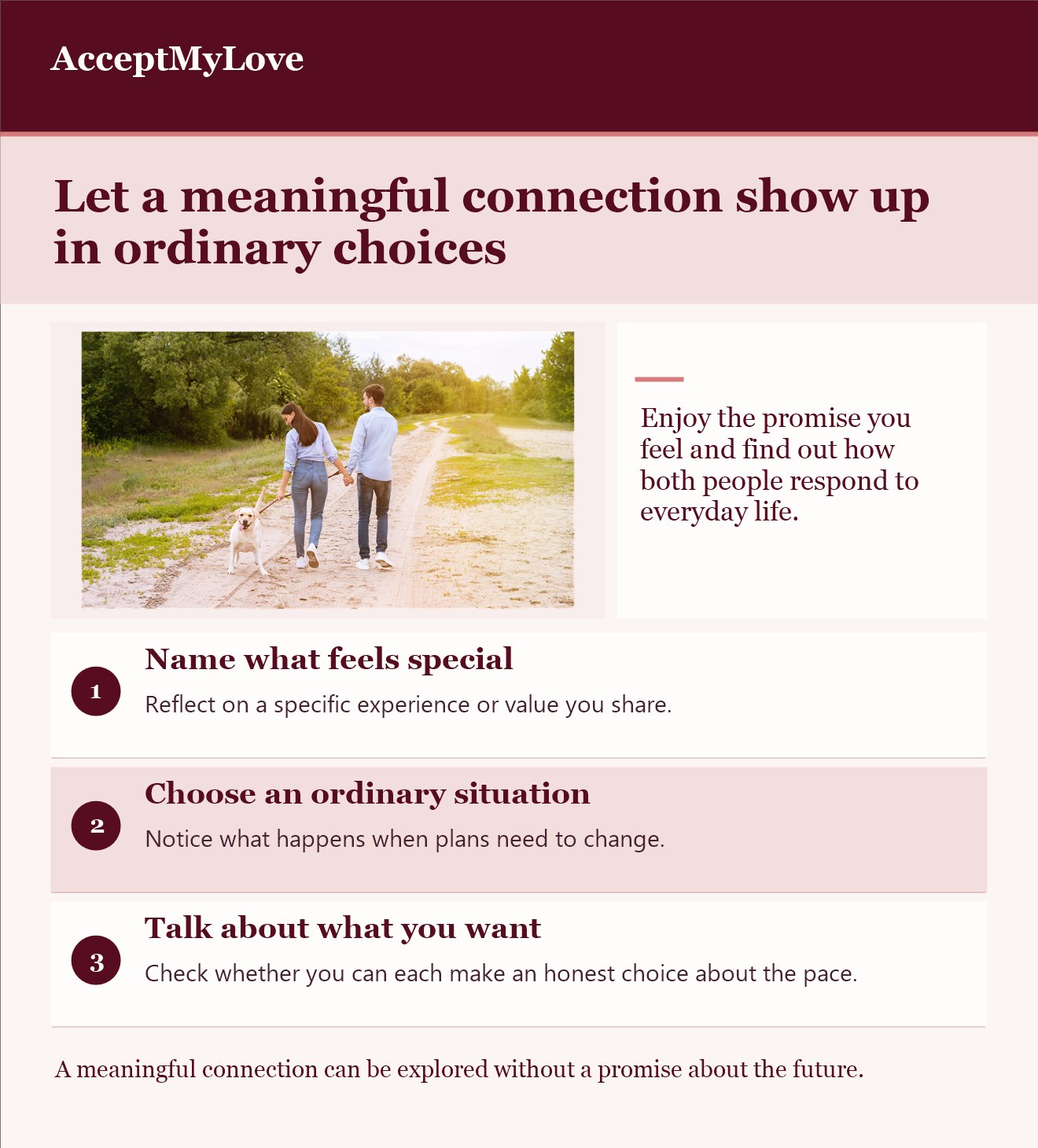
Read the infographic in text
Let a meaningful connection show up in ordinary choices
Enjoy the promise you feel and find out how both people respond to everyday life.
- Name what feels special Reflect on a specific experience or value you share.
- Choose an ordinary situation Notice what happens when plans need to change.
- Talk about what you want Check whether you can each make an honest choice about the pace.
A meaningful connection can be explored without a promise about the future.