

A relationship that begins soon after a breakup is often called a rebound. The timing alone does not tell you whether the connection is sincere, whether it will last or whether either person is ready for the relationship the other wants.
You may feel grief, relief, attraction and uncertainty at the same time. Whether you are newly single or dating someone who is, focus on honest expectations, the pace you can manage and the choices available to both of you.
Understand what you want from this connection
Ask what you hope dating will add right now: companionship, sex, distraction, a committed partnership or the chance to meet someone without deciding the future. More than one answer is possible, but it helps to know which expectations you are bringing to a date.
A new connection can be enjoyable without becoming responsible for healing every part of your breakup. Keep some ways to look after yourself that do not depend on the new person being available.
If you mainly want an ex to notice, pause before involving someone else in that aim. Posting a date’s photograph or encouraging jealousy without their knowledge treats their feelings and privacy as tools. Ask whether you would still want the date if your ex never found out.
Choose a pace before making promises
There is no number of days or months that establishes readiness. Consider whether you can be present on a date, hear a no, talk about your intentions and respect someone whose wishes differ from yours.
You can begin with a short meeting and decide later whether you want another. Avoid agreeing to exclusivity, shared finances or major plans simply to make a new connection feel secure.
Casual dating can be a mutual choice when both people understand what is being offered. It is not a promise that feelings will stay casual. Discuss consent, privacy and expectations, and make room to revisit the arrangement.
Be honest about what you can offer
You do not owe a new date every private detail about your former partner. You do need to be clear about commitments, availability and intentions that would affect the other person’s choice to continue.
You might say, “I recently ended a relationship and I enjoy seeing you. I want to move slowly, and I am not ready to promise exclusivity. How does that fit with what you want?” Give the other person room to decide that it does not fit.
If you are dating someone newly single, ask directly rather than trying to measure how much they mention their ex. “Are you looking for a relationship now, or are you still figuring that out?” An uncertain answer is information you can use; it is not a commitment to wait.
Get to know the person in front of you
Let this person have their own preferences, habits and limits. Notice whether you are learning about them or repeatedly comparing them with the relationship that ended. A different haircut, career or personality does not automatically make someone a better match.
Keep time with friends, interests and ordinary responsibilities. If every difficult evening becomes an urgent demand for reassurance from the new person, consider another source of support as well.
Contact with an ex may be necessary for parenting, housing or other shared responsibilities. Discuss workable boundaries rather than assuming that all contact must end. Privacy does not mean a new partner is entitled to passwords or access to messages.
Look at how the relationship works now
The rebound label cannot predict the outcome. Look at what is happening: are your expectations understood, do you both have a say and are agreements being kept? A hopeful beginning still needs time to reveal how you handle differences.
Check in when something changes. One person may start wanting commitment while the other still wants occasional dates. Say that clearly rather than hoping the other person will infer it from more frequent messages or sex.
Slow down or step away if there is pressure to commit, unwanted sexual contact, repeated dishonesty or a refusal to respect your limits. A recent breakup can explain complicated feelings; it does not excuse treating another person badly.
Choose the next step together
You can choose another date, a different pace, a pause or an ending. The other person has the same freedom. If your wishes differ, try to be clear and kind without promising that you will become ready later.
If you are still making room for the previous loss, Letting Go of Someone You Love offers ideas for daily care and contact boundaries. The NHS guide to grief and loss also recognises the end of a relationship as a loss; there is no need to force your feelings into a fixed sequence.
Before your next meeting, ask yourself: “What can I honestly offer, what do I want to know and what would make this pace workable?” You can enjoy a new connection without asking it to settle the whole future.
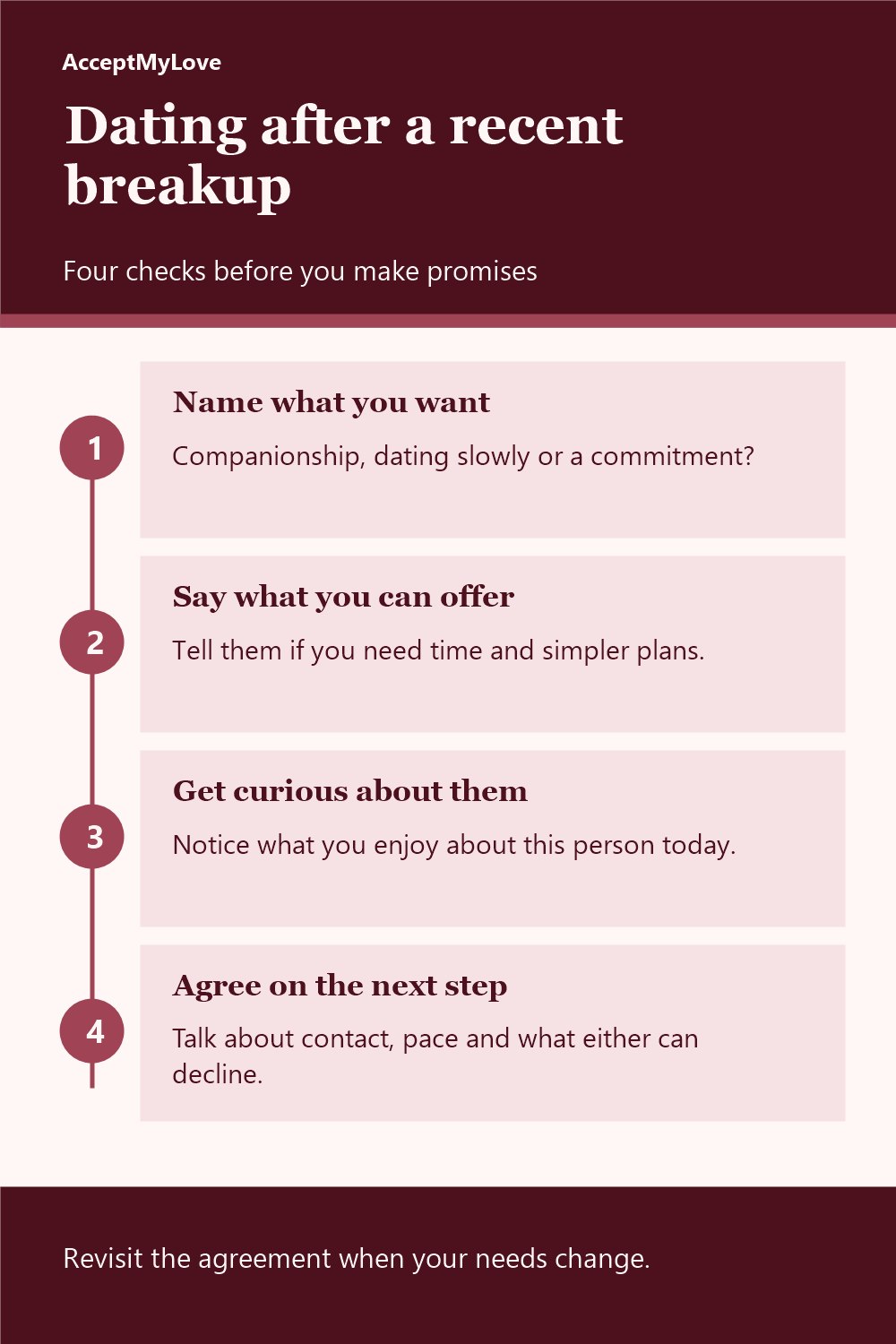
Read the infographic in text
Dating after a recent breakup Four checks before you make promises
- Name what you want Companionship, dating slowly or a commitment?
- Say what you can offer Tell them if you need time and simpler plans.
- Get curious about them Notice what you enjoy about this person today.
- Agree on the next step Talk about contact, pace and what either can decline.
Revisit the agreement when your needs change.