

When a partner seems less affectionate or less involved, it is understandable to worry that their feelings have changed. Distance alone cannot tell you whether they have stopped loving you. Stress, unresolved conflict and different needs for closeness can also affect how a relationship feels.
Start by distinguishing a worry from something your partner has actually said. If they have clearly ended the relationship, you do not need to keep investigating whether there is a hidden chance. If the situation is uncertain and talking is safe, a direct conversation can give you more useful information than monitoring messages or guessing.
Take a moment and clarify what you know
Give yourself room to pause before making a major decision or sending a series of messages. Write down the specific change you have noticed: fewer shared plans, withdrawn affection or an unanswered question about the future. Keep observations separate from conclusions such as “I have become unlovable”.
You might ask: “We’ve spent less time together lately, and I’m unsure where we stand. Do you want to continue this relationship?” Ask what they are willing to do next, not for a promise that feelings can never change. If both people want to work on the relationship, agree on a practical step and when you will discuss it again.
Create contact arrangements that support you
After a stated breakup, frequent checking of social media can keep bringing you back to the same painful questions. You can mute updates, pause optional contact and ask friends not to pass along news. Choose these limits for your own breathing room rather than as a strategy to make your ex miss you.
Where children, shared housing, belongings or other responsibilities require contact, keep messages focused on the necessary arrangements. A written channel or agreed time may help if it is safe. Avoid following the person, using another account to watch them or asking others to investigate their life.
Keep the breakup separate from your worth
You may feel rejected, angry, relieved, confused or several things at once. None of those feelings makes you foolish. A relationship ending does not show that you were worth less than your partner or that you should have predicted every change.
Try replacing an absolute conclusion with a description you can support: “This relationship has ended, and I’m hurting” leaves more room than “Nobody will ever love me”. You do not have to force optimism or turn your ex into a villain to acknowledge that the relationship is no longer available to you.
Face forward through small, manageable actions
Think about the next day before trying to solve the rest of your life. Have something to eat, make room for sleep and choose one manageable task. Ask a trusted person for specific company or practical help: a walk, a meal or help sorting an essential appointment.
You can return gradually to interests that matter to you without pretending to be happy. The NHS relationship guidance includes time for yourself, a balanced view of your thoughts and talking with someone you trust. Grief does not run to a fixed schedule, and a difficult day does not cancel a better one.
Separate practical decisions from attempts to win them back
List urgent matters such as access to your home, essential possessions, shared bills or arrangements for children. Handle one issue at a time. If housing, money or parenting decisions are complicated, seek advice appropriate to your location rather than making agreements while overwhelmed or relying on an ex’s interpretation alone.
You do not have to settle every emotional question before arranging to collect your belongings. Equally, you need not accept unwanted meetings, intimacy or repeated arguments as the price of resolving practical matters. A trusted person may be able to help you prepare or accompany you when that is safe.

Get support when distress or safety concerns need more help
If the distress is making daily life difficult, consider speaking with a qualified health professional or counsellor. You can ask for support without waiting until you have a complete explanation of what went wrong. If you feel at immediate risk of harming yourself or cannot stay safe, contact local emergency or crisis support.
Threats, intimidation, coercion or monitoring call for a different approach from an ordinary relationship conversation. You do not have to confront the person alone. In the United States, the National Domestic Violence Hotline safety-planning resource offers a starting point for planning around your circumstances. Elsewhere, seek a local domestic abuse service. Use a safer device if yours may be monitored.
For now, choose one step that protects your needs. You can respect another person’s decision and still give your own pain, boundaries and future careful attention.
Read the infographic in text
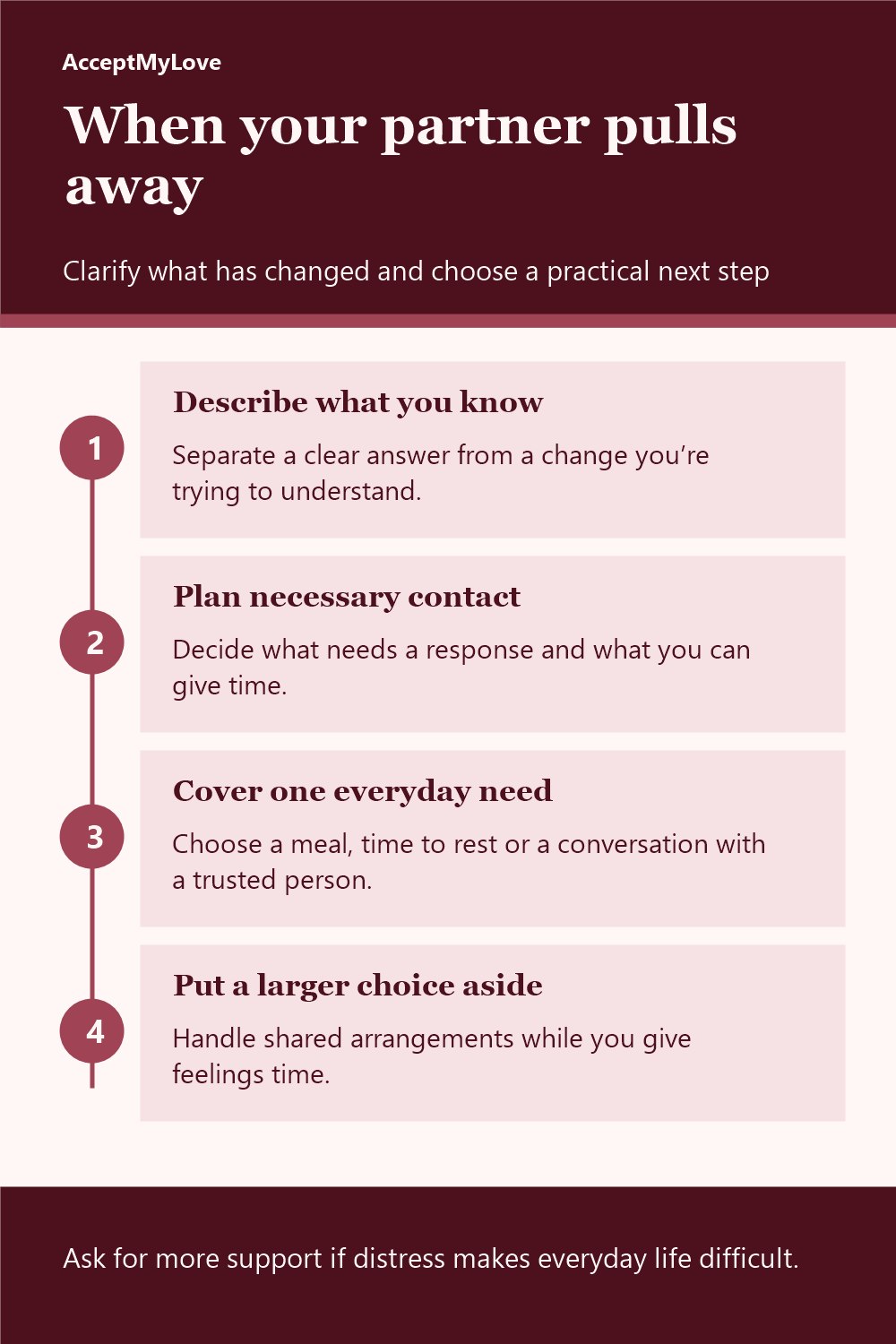
When your partner pulls away
- Describe what you know Separate a clear answer from a change you’re trying to understand.
- Plan necessary contact Decide what needs a response and what you can give time.
- Cover one everyday need Choose a meal, time to rest or a conversation with a trusted person.
- Put a larger choice aside Handle shared arrangements while you give feelings time.
Ask for more support if distress makes everyday life difficult.