

When someone seems especially attractive, successful or socially confident, you may decide they are “out of your league” before you have spoken. That comparison can make an ordinary conversation feel like an audition. You can approach them with curiosity without pretending to be wealthier, more important or less interested than you are.
No technique can make a particular person want a relationship. What you can do is show interest honestly, notice how they respond and decide whether the connection feels mutual. Their answer is information about this possible match, not a ranking of your value.
Separate what you know from what you assume
You may know that someone is accomplished, stylish or popular. You may not know their relationship status, preferences, kindness or interest in you. Admiration can fill those gaps with an idealised picture, leaving you comparing your whole life with a small part of theirs.
Ask yourself: “What have I actually learned about this person, and what am I imagining?” People can differ in income, appearance or social experience without one being worth more. Compatibility also involves how you treat each other and what you both want. You do not have to dismiss their achievements to stop putting yourself beneath them.
Start with a conversation you both have room to enjoy
Choose a context where conversation is welcome. A shared activity or mutual interest gives you something concrete to talk about: “How did you get involved with this group?” or “What did you think of the event?” Offer something about yourself as well, so the exchange can become a conversation rather than an interview.
Pay attention to their availability. Someone who is working, wearing headphones, leaving or trying to end the exchange may need space. A friendly reply can be pleasant without being romantic. You can enjoy a short conversation and leave it there.

Present yourself honestly without performing a higher status
You can dress in a way you enjoy and speak about what interests you without inventing wealth, qualifications, connections or experiences. Sharing personal information gradually is reasonable; creating a misleading impression to keep someone curious makes it harder for either person to understand the connection.
Mutual friends can make an introduction if everyone is comfortable. They should not be recruited to inflate your status, reveal private information or pressure the person. You are giving someone a chance to know you, rather than arranging a campaign to change their perception.
Make one clear invitation when the situation suits it
If you would like a date, an ordinary question can be enough: “I’ve enjoyed talking with you. Would you like to have coffee with me sometime as a date?” Use a suggestion that fits your budget and gives the other person an easy way to answer. You do not need an extravagant plan to establish your worth.
If the answer is yes, agree on practical details rather than assuming that the invitation settled every romantic expectation. If the answer is no or they do not engage, leave the invitation there. Repeated persuasion, jealousy or calculated unavailability does not turn uncertainty into mutual interest.
Notice whether you feel respected too
Attraction is a reason to learn more about someone, not a requirement to accept dismissiveness. Do they listen, show curiosity, follow through and respect a limit? Are you comfortable expressing a preference, or are you constantly agreeing because you fear losing their approval?
You can be kind without paying for everything, doing favours you resent or giving up your own plans. Avoid treating basic courtesy as a bargaining tool. If a connection only seems possible when you hide your needs, consider whether you would actually enjoy being in that relationship.
Let the outcome inform your choices without defining you
A date may lead to another meeting, friendship or no further contact. You are allowed to feel disappointed. Try keeping the conclusion specific: “They didn’t want to date me” gives you more room than “No one like that would ever want me.” You cannot know every reason for another person’s choice.
The NHS guidance on healthy relationships includes taking a more balanced view of yourself and keeping your own interests. After an invitation, return to the people and activities that support your life instead of repeatedly reviewing how you could have performed better.
You do not need to win someone above you. You are looking for a person who wants to know you and whose company you freely choose too.
Read the infographic in text
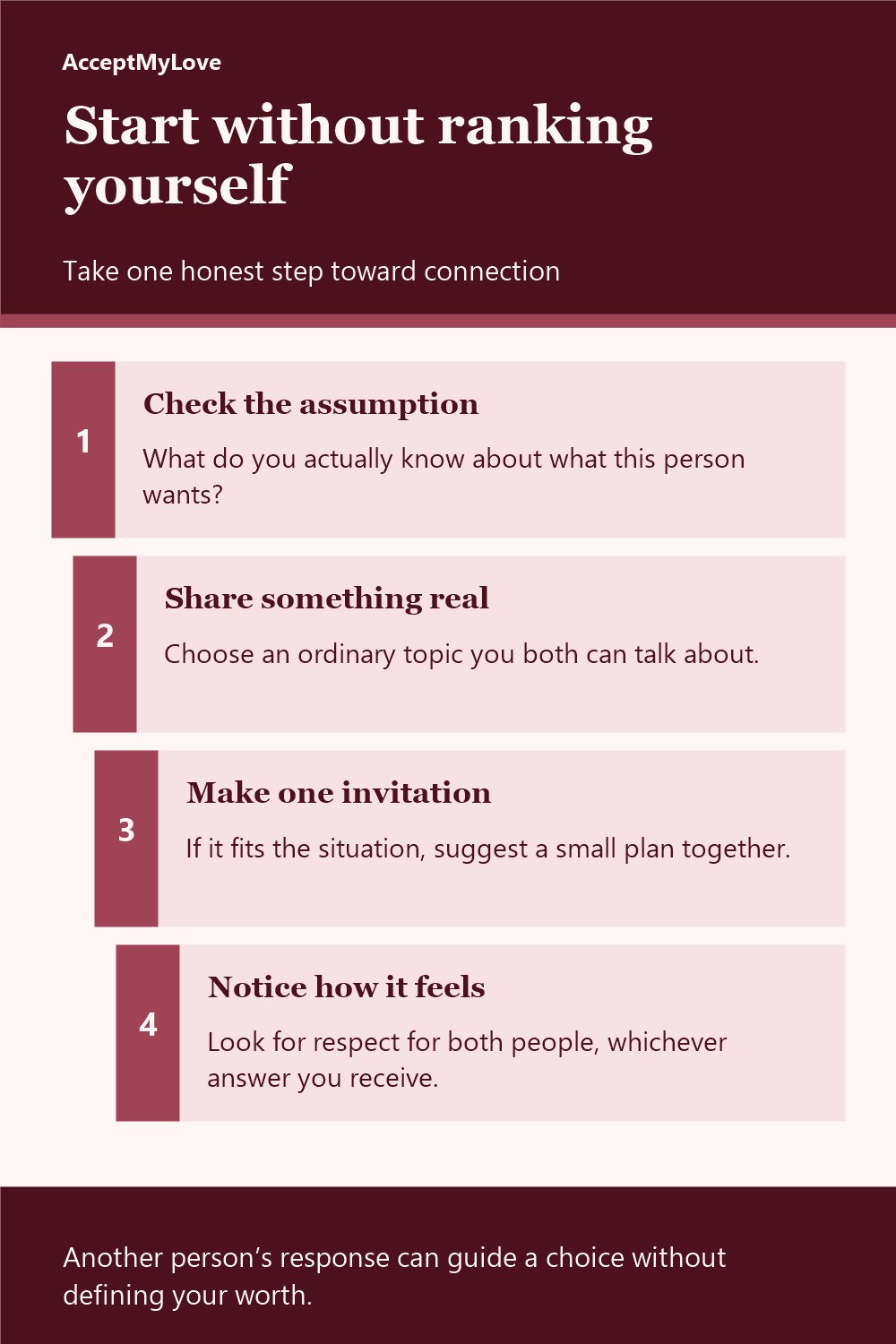
Start without ranking yourself
- Check the assumption What do you actually know about what this person wants?
- Share something real Choose an ordinary topic you both can talk about.
- Make one invitation If it fits the situation, suggest a small plan together.
- Notice how it feels Look for respect for both people, whichever answer you receive.
Another person’s response can guide a choice without defining your worth.