

Suspecting infidelity can leave you searching for an explanation for every late arrival, private message or change in affection. Your distress deserves attention, even while the explanation remains uncertain.
Begin with what you actually know and the relationship agreements you want to understand. You can ask for clarity and decide what you need without treating a checklist, a friend’s guess or a feeling as proof of an affair.
Separate observations from explanations
Write down a specific concern in plain language. “We agreed to tell each other if plans changed, and twice this week I could not reach you” describes something you can discuss. “You stayed late, so you must be cheating” adds an explanation you have not established.
Changes in routine, appearance, sexual interest or phone use can have several explanations. Stress, health, work and a wish for privacy may also affect behaviour. Equally, a reasonable-sounding explanation does not settle every question. Look for clarity about the actual concern and whether agreements are being respected.
Repeated dishonesty or a confirmed breach of an agreed boundary matters on its own. You do not have to uncover every detail of another person’s life before considering whether the relationship is workable for you.
Avoid treating body language as a lie detector
Looking away, pausing before answering, folding arms or touching the face cannot establish that someone is having an affair. A research review on nonverbal behaviour and deception describes the known cues as weak and unreliable. Reading one gesture as a confession can lead you away from the question you need answered.
Friends may notice tension or distance, but their impressions are also incomplete. If someone offers information, distinguish what they directly observed from what they heard or inferred. Avoid recruiting friends to watch, test or confront your partner.
If you value intuition or spiritual reflection, you can use it to notice feelings and questions. A feeling or reading cannot establish another person’s private actions. Bring the concern back to observable behaviour, direct information and your own boundaries.
Clarify your agreements without invading privacy
Couples can mean different things by exclusivity, flirting, emotional intimacy or contact with a former partner. Ask what each of you understood the agreement to be. A conversation may reveal a misunderstanding, an unresolved difference or a clear breach of an existing commitment.
Privacy and secrecy can feel difficult to distinguish when trust is strained. You can explain what has affected you and what information you need to make your own decisions. That does not authorise accessing private accounts, installing tracking software, impersonating someone or demanding sexual proof of loyalty.
A voluntary agreement about future contact or transparency should be specific and open to review. Consider whether it supports a workable relationship or keeps both people in an exhausting cycle of checking and reassurance.

Plan a direct conversation when it is safe
Choose a time with room to talk, away from children and without alcohol or another avoidable pressure. Lead with the behaviour and its effect: “I noticed these conflicting explanations. I feel uncertain, and I want to understand what happened.” Ask one clear question and allow an answer.
You can ask for a pause, return later or decide that a conversation is going nowhere. Avoid threats, public accusations and repeated interrogation. You also do not have to accept insults, intimidation or blame for asking a reasonable question.
If you fear retaliation, seek private support before raising the issue. The National Domestic Violence Hotline explains the risks of joint counselling with an abusive partner. A local domestic abuse service can help you consider safer options without requiring you to confront the person first.
Care for your health and daily stability
Try to keep basic routines manageable: meals, sleep, essential work and contact with someone trustworthy. Choose a confidant who can listen without spreading claims or pressuring you to decide immediately. You can ask for practical company or help with a task instead of retelling every detail.
If you think you may have been exposed to a sexually transmitted infection, speak with a healthcare professional about testing and protection. The CDC notes that STIs can occur without symptoms and that appropriate testing depends on individual circumstances. You do not need a partner’s admission before asking about your health.
Ask the clinician how to interpret your result and what follow-up is appropriate. Health information can guide care and informed choices; it cannot answer every question about a relationship. You can seek medical support while separately deciding what you need from your partner.
Choose a next step you can review
Possible next steps include seeking clarification, taking space, getting individual support, considering joint counselling when safe and wanted, or ending the relationship. You can take time to consider the practical effects on housing, finances, children and support.
If you want to try rebuilding trust, discuss the behaviour that needs to change and how you will review progress. An apology can begin a conversation, but consistent actions and respect for boundaries matter over time. Forgiveness, reconciliation and continued contact are separate choices.
You are allowed to decide that uncertainty, dishonesty or the current relationship is more than you want to continue with. You do not owe an immediate decision, a guaranteed second chance or an investigation that consumes your life. Choose the next manageable step that gives you more clarity and support.
Read the infographic in text
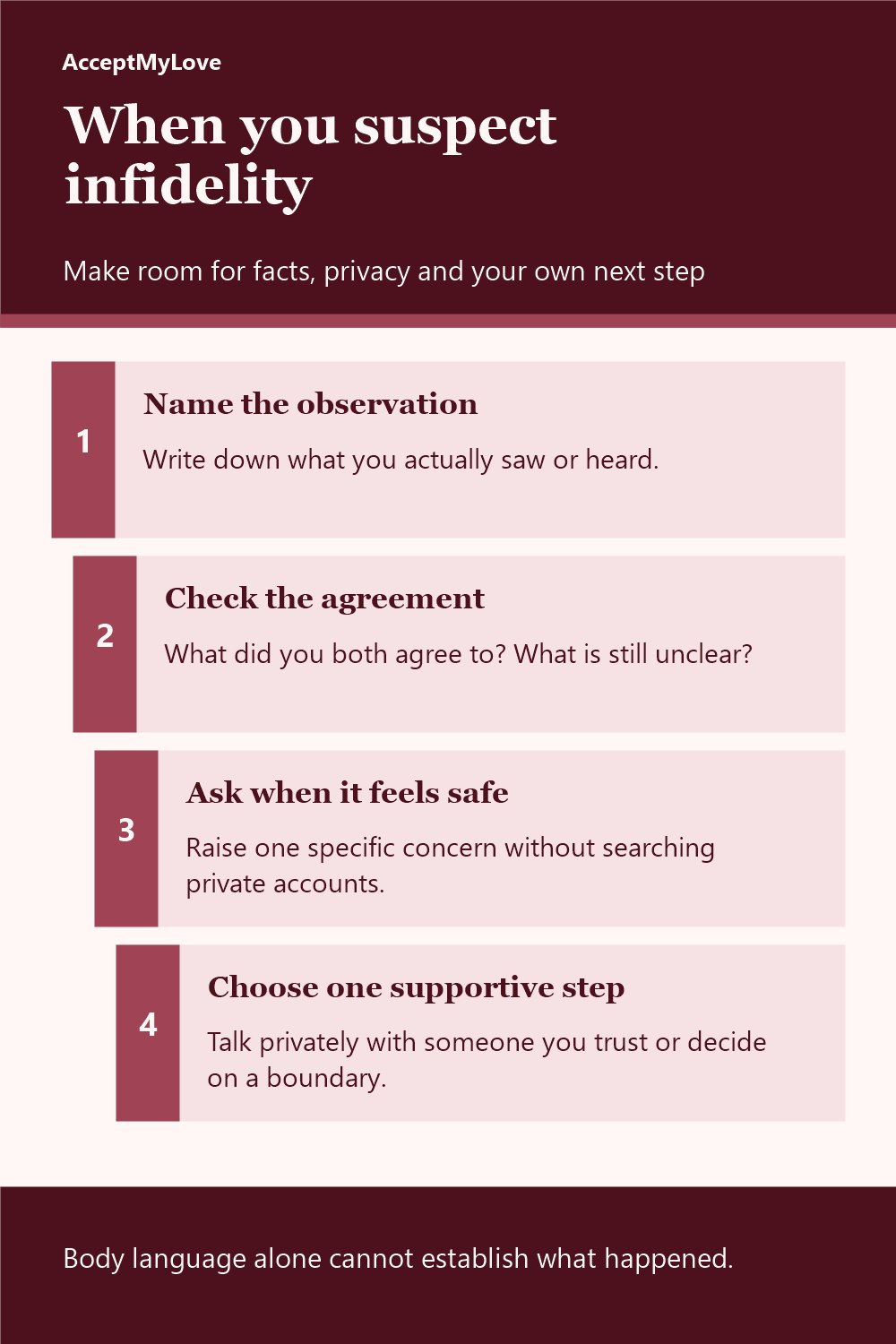
When you suspect infidelity
- Name the observation Write down what you actually saw or heard.
- Check the agreement What did you both agree to? What is still unclear?
- Ask when it feels safe Raise one specific concern without searching private accounts.
- Choose one supportive step Talk privately with someone you trust or decide on a boundary.
Body language alone cannot establish what happened.