

Compatibility becomes clearer through conversations and everyday choices. These 30 questions can help you discuss the life you want to share, including differences that attraction alone may leave unexplored.
Choose a few questions at a time. Each person should have room to answer, ask for clarification or leave a topic for later. There is no score or ideal set of answers; the aim is to understand what each person wants and whether your choices can work together.
Use the questions at a comfortable pace
Try a quiet moment when neither person is rushing. Take turns answering rather than interviewing a partner or guessing what they ought to say. “What would that look like in practice?” is often more useful than deciding immediately whether an answer is good or bad.
You can disagree and still listen respectfully. Pay attention to whether both people can say no, change their minds and ask for what they need. If raising ordinary concerns leads to threats, intimidation or retaliation, prioritise your safety and seek confidential support.
Values, identity and time together
- What values do you most want our relationship to reflect, and how would we put them into practice?
- Which parts of your identity, beliefs or daily life do you want a partner to understand and respect?
- How much time together and time alone feels comfortable to each of us?
- How will we make room for friendships, interests and support outside the relationship?
- What makes you feel cared for, and which ways of showing care feel natural to you?
- Which differences can we comfortably live with, and which would require a major compromise?
Similar interests can be enjoyable, but you can also share values while enjoying different activities. Discuss what acceptance means when neither person is expected to become someone else.

Communication, trust and repair
- How would you like me to raise a concern, especially when we are tired or stressed?
- What helps each of us pause a disagreement and return to it constructively?
- What does a meaningful apology involve, and what follow-through would help rebuild trust?
- What agreements do we want about exclusivity, flirting and contact with former partners?
- What privacy do we each need around messages, devices and personal conversations?
- How will we handle a situation where one person’s account or actions do not match an agreement?
Trust can include clear agreements and respect for privacy. It should not require unrestricted access to someone’s accounts or constant proof of their whereabouts. Notice how agreements work over time.
Affection, intimacy and consent
- Which kinds of affection do we enjoy, and how do we prefer to ask for them?
- How can either of us decline physical or sexual contact without pressure, sulking or punishment?
- What would help us talk about sexual preferences, protection and health when those topics are relevant?
- How might we respond if our interest in sex, touch or romance differs or changes?
- Which boundaries matter around public affection and sharing personal details with others?
- How can we stay emotionally connected while respecting different needs for closeness?
Affection and sex mean different things to different people. Leave room for disability, health changes, asexuality and preferences that do not match assumptions about how a couple should behave. Consent remains necessary within an established relationship.
Money, home and shared responsibilities
- What does financial security mean to each of us, and what pressures or commitments should we discuss?
- How would we divide shared expenses in a way that reflects our resources and feels fair?
- Which financial decisions would need a conversation before either person acts?
- How will we share household work, planning and caring responsibilities, including tasks that are easy to overlook?
- What would change if one of us became ill, disabled, unemployed or responsible for someone else’s care?
- What boundaries would we want around relatives, visitors, living arrangements and practical help?
Fairness may involve different contributions rather than identical amounts. Discuss access to shared information, personal spending and support needs without requiring financial dependence or control.
Children, future plans and the next step
- Do we want children, and how would we approach uncertainty or different preferences about parenthood?
- If children are part of our lives, what principles would guide parenting, discipline and relationships with other caregivers?
- How would we balance work, study, relocation and each person’s ambitions?
- What commitments do we each want, and what do marriage, partnership or living separately mean to us?
- Which decisions can wait, and which need clarity before we make a larger commitment?
- What is one agreement or unresolved question we want to revisit, and when will we discuss it?
Finish with something specific: an agreement to try, a question to explore or a difference that needs more thought. Avoid promising a major life choice just to end an uncomfortable conversation.
You do not have to reach agreement on everything in one sitting. If important discussions repeatedly become stuck, a suitably qualified relationship counsellor may help you explore your options. Each person still has the right to decide what kind of relationship they want.
Read the infographic in text
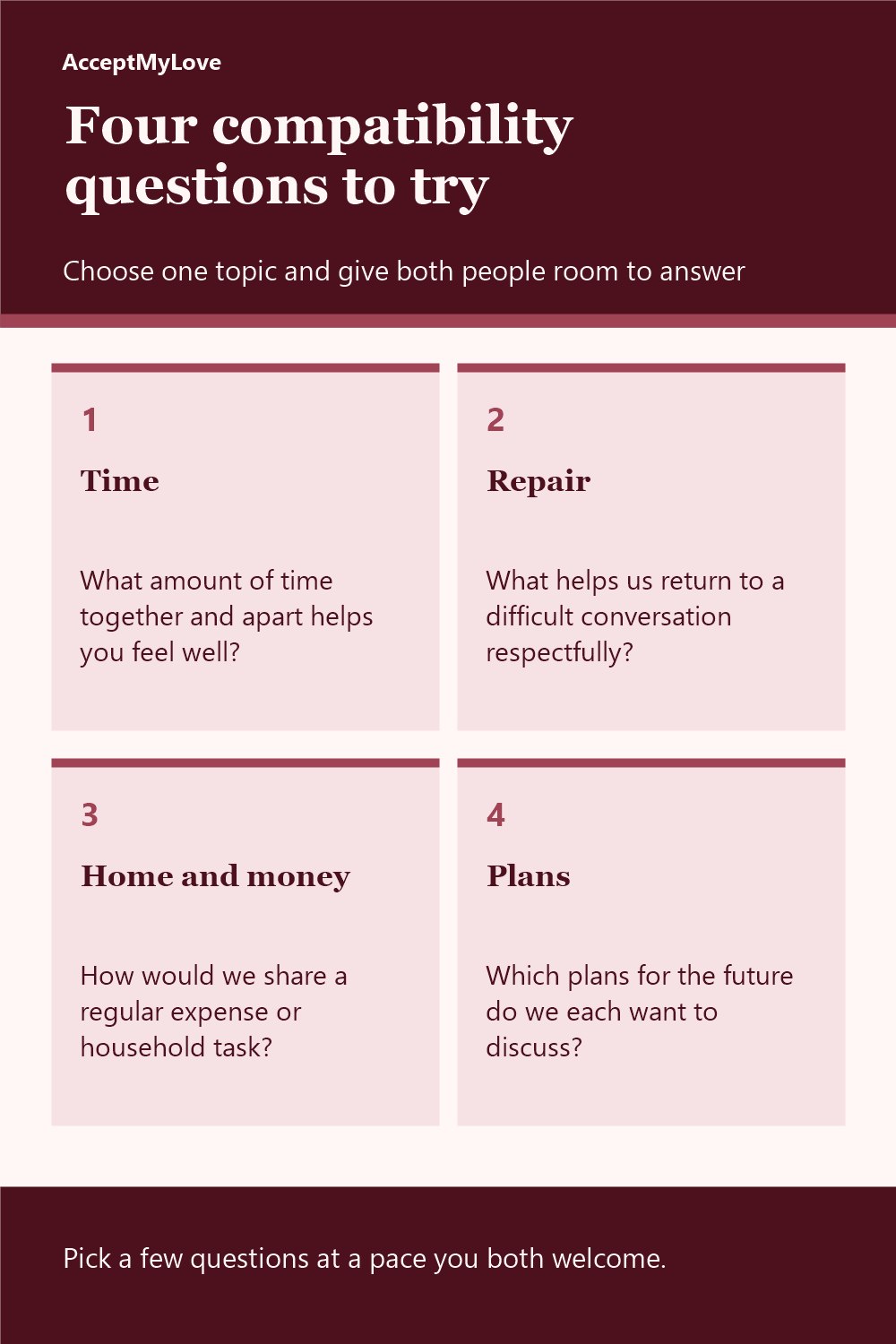
Four compatibility questions to try
- Time What amount of time together and apart helps you feel well?
- Repair What helps us return to a difficult conversation respectfully?
- Home and money How would we share a regular expense or household task?
- Plans Which plans for the future do we each want to discuss?
Pick a few questions at a pace you both welcome.